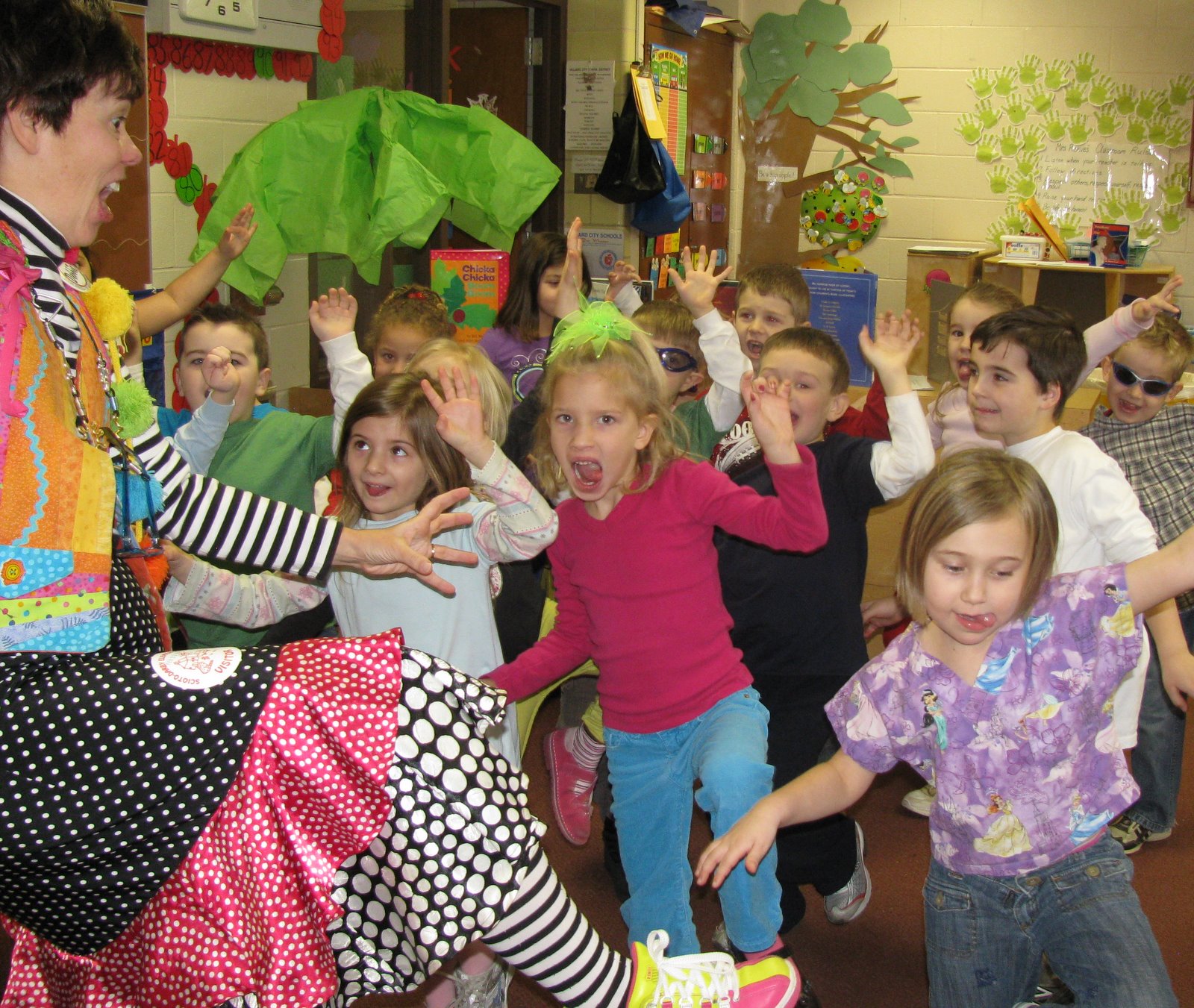
Showing posts with label Connie B. Dow: movement. Show all posts

Friday, November 2, 2012

Moving is Learning!! NAEYC in Atlanta

photo of: NAEYC: Connie Dow + Debbie Clement "Moving is Learning"

One week from today! 
Are you coming to Atlanta? 
NAEYC bound? 

This is your personal invitation to come hear Connie Dow + moi present: 

"MOVING IS LEARNING!" 

In the meantime I'm headed to Montgomery Texas..... 
I have an all-day seminar to present tomorrow for the area ECE community. 

-- Debbie -- 

Tuesday, October 2, 2012

Who are You Becoming? DANCE!!

photo of: flower unfurling from RainbowsWithinReach

It's time for the dance of life to REALLY begin. 
Our car is packed from: 
'top to bottom, left to right, left to right.'


Don't get that reference? 
Need to see that YouTube video for explanation? 
From my Debbie's Ditties 6: The Handwriting Mix.

Seriously. Car is packed full.  

While you are appreciating this photographic sentiment, we are beginning our annual sojourn south. 

I counted and over the next seven weeks, I have opportunities in nine states: school visits, conferences, 
KEYNOTE for the state of ARKANSAS! 
NAEYC. YES! NAEYC!!
Let the dance begin! 
Connie Dow has invited me to co-present!
My name won't make the program. You'll just have to tell a friend. 
Atlanta. Friday 3:00. Find us! 
"Moving is Learning!"


photo of: NAEYC: Connie Dow + Debbie Clement "Moving is Learning"
RainbowsWithinReach Booth #1910 Atlanta NAEYC Convention

Two trips to Texas. 
Hugging all of our wonder-peeps. 

Yes. It's time for the dance of life. 
Have camera. Will travel. 
The moment has arrived. 

-- Debbie -- 


Last night the coolest thing happened! 
I have just gotten my Monster Spray Mp3 package uploaded to Teacher's Pay Teachers. 

It was purchased last night by a person who exercised the right to an additional license at half price!
The digital download at TpT is for one person's use in their classroom. 
BUT in the last week TpT has rolled out the option that if you purchase one product for yourself, that while shopping you can plan ahead and buy enough licenses -- for your entire team, or your ENTIRE building, at 50% off! 

Pre-K, Kindergarten, First, Second, Third, Fourth, Fifth, Sixth - TeachersPayTeachers.com WHAT A DEAL! 

Sunday, November 6, 2011

NAEYC. Orlando: Hop, Turn, Freeze

Orlando. A few final parting shots before NAEYC is just a glimmer in my memory. That's THE Mary Jo Huff. We of the hats. I dare say, it appears that she has some bright polka-dots in her garb!!! It's such a bustling busy time. I'm so grateful that she came to stop by and we could catch up and talk over our collaborative blog, PreK + K Sharing -- as she will be one of the original contributing authors.


It was definitely celebrity time at RainbowsWithinReach. That's my first meeting of Amy Mascott both the brains and the heart behind the amazing website and virtual teacher's lounge of WeTeach. We had time for a hug and a picture and about three minutes of conversation, but it was fun to meet-in-person!!! Amy was much more conversant than the other celebrity who stopped through. LOL.

.
Welcome to our workshop: "Hop, Turn, Freeze:"


Posted by Picasa

Friday, November 4, 2011

NAEYC Celebrations!!!!

It's a REDLEAF PRESS PARTY!!!!!


It's a "One, Two, What Can I Do?" Party!!!!


It's a HIGHLIGHTS HIGH FIVE PARTY!!!!

It's a get-interviewed-for-radio-telecast party!!!!

It's a BIG-APPLE Hug Fest Party!!!!


It's a Donna Wittmer & Dr. Alice Hong Hug Party!!!


Posted by Picasa

Friday, September 9, 2011

Movement & Dance Part 5

Ladies and gentlemen!!!! I bring you the final installment in this particular portion of my interview with Connie Dow, author of Redleaf's "One, Two What Can I Do?" and national expert on movement and dance for young children. Connie is giving us her 7 benefits of including these art forms within your school day in response to a question posed by Vanessa Levin. The question stems from how to encourage teachers who may feel silly in front of other adults. Connie is taking the time to outline the significance of movement + dance in the hopes that if teachers realize the comprehensive benefits that are possible, they will be willing to engage in some 'sillyness' for the sake of optimizing their time with children.


Take it away Connie, we're ready for number five!!
5th Benefit:  Emotional Growth
Also From NDEO:

Dance promotes psychological health and maturity. Children enjoy the opportunity to express their emotions and become aware of themselves and others through creative movement.  A pre-school child enters a dance class or classroom with a history of emotional experiences.  Movement within a class offers a structured outlet for physical release while gaining awareness and appreciation of oneself and others. Dance fosters social encounter, interaction, and cooperation.


6th Benefit:  Creativity
 Could nurturing the creative side of our children be a key to the future success of the United States?  There is no question that education in the U.S. is in need of some serious revamping.  As stated in the 2007 report of a comprehensive study of the American workforce,  “Whereas for most of the 20th century the U.S. could take pride in having the best-educated workforce in the world, that is no longer true.” In proposing solutions, the authors of the study point to the development of creative thinkers as one of the keys to success:  “Seeing new patterns and possibilities is the essence of creativity . . and creativity, innovation, and flexibility will not be the special province of an elite. 


It will be demanded of virtually everyone who is making a decent living, from graphic artists to assembly line workers, from insurance brokers to home builders.”


The creative arts, by definition, nurture this aspect of the developing child.  Movement specifically allows students to approach tasks “through the body, or kinesthetically,” and come up with new answers.


Connie, you know how I feel about creativity!!


7th Benefit   The Whole Child
Dance, as an art form and physical activity, is part of the education of the whole child.  The Association for Supervision and Curriculum Development
 believes a comprehensive approach to learning recognizes that successful young people are knowledgeable, emotionally and physically healthy, motivated, civically inspired, engaged in the arts, prepared for work and economic self-sufficiency, and ready for the world beyond their own borders.
ASCD calls on parents, educators, policymakers, and communities to join forces to ensure our children become productive, engaged citizens. Our children deserve an education that emphasizes academic rigor as well as the essential 21st century skills of critical thinking and creativity.

Take us home, Connie!! Wrap it up for us!!! Go Connie, Go Connie!!
Developmentally appropriate practice dictates that we educate the whole child.  Furthermore, academics and physical activity are not mutually exclusive.  A number of researchers have found that regular physical activity contributes to improved school performance. As neurophysiologist Carla Hannaford states in her book Smart Moves:  Why Learning Is Not All In Your Head:because movement activates the neural wiring throughout the body, the whole body, and not just the brain, is an instrument of learning.

I hope this blog entry has provided lots of food for thought, and reinforced your instincts to bring the delightful arts of creative movement and music to your learning environment!

Keep on dancin’,
 Connie


I have just added this article to the link-up being hosted by "PreK+K Sharing" on all things to encourage children to be ACTIVE!!!

Posted by Picasa
PreK + K Sharing

Thursday, September 8, 2011

Movement & Dance Part 4

Learning. I'm learning! This summer I've spent learning. Learning about how to connect my blog to a bigger world. I still have a lot to learn! Yet my efforts are working!!! Welcome to my slice of the rainbow!! If this is your first visit -- I'm so very thrilled that you've found me, found us!! We're in the midst of an awesome interview with Connie Dow, author of  Redleaf's "One, Two What Can I Do?" and national expert on dance + movement for children. 

Connie is in the midst of sharing her 7 benefits of incorporating dance + movement into the lives of children. (I personally feel these are benefits for the whole of the human species, but we won't split hairs here.) 

Connie, thanks for being so patient with my blogging format. Please continue.

2nd Benefit: Curriculum Enrichment
"One example of how movement can easily align with the Core strategies is to be found under the Learning and Experiences and Environment category:  Children learn best through play and concrete experiences that are tied to familiar aspects of their world.  Through movement, children can experience a concept in their bodies and learn the concept kinesthetically.  (See the earlier example about learning the concepts of opposites in a game about fidgeting by clicking here.)

Another example from this Learning Experiences and Environment category from the Core Knowledge and Competencies points to the importance of nurturing curiosity, thinking, and problem solving skills.  Movement activities are the perfect forum for imaginative play and individual and group problem-solving tasks

Ohio’s Early Learning Content Standards can also easily be addressed through movement specifically for dance in the ODE Fine Arts Academic Content Standards, one of the benchmarks for Kindergarten is for the children to: 'Invent movement phrases that use the elements of dance, space, time, force, and body.'

Movement time is learning time, and can be used to teach virtually any subject, crossing all learning domains. Movement can supplement another lesson, and can be used in short bursts, in transitions, and in games to get the children settled down for a quieter activity, as well as an entire lesson built around a theme. Simple and inexpensive props, such as streamers, scarves, simple costumes, music and other art forms can be incorporated along with movement."

Tell us more!! Tell us more!!! Go Connie, Go Connie!!

3rd Benefit:  Physical Development
"Movement development in young children mirrors brain development in infants.  There is a body of work on this subject called Brain Dance, being developed in Seattle by Ann Green Gilbert.  Her basic premise is that through a specific series of simple movements, we can tap into the parts of the brain that are stimulated in the same order and patterns as they were during brain development. Green Gilbert is a proponent of using these movements as a kind of brain/body warm up, one or more times a day, before a test, when children need a break, etc., and as a way to get the brain stimulated and the body moving.

Movement activities can make the learning of motor skills, such as marching, hopping, jumping, galloping, sliding (sideways galloping), and balancing fun and enriching.  And, once the children have mastered a skill, such as marching, you can use the elements of dance (the body, time, space, and energy), to create tasks around that motor skill, which helps reinforce the skill, and taps into the imagination as well. 

Taking the simple movement of marching as an example and using the elements of dance, you can say,  “Can you march backwards, sideways, low, high, in a circle, swinging your arms, could you march with only one foot?  What is that called?  Can you lie on your back and march with your feet?  Your arms?   Can you march making lots of noise with your feet?  Can you march looking like you are making a lot of noise, but being as quiet as a mouse?"

Guided movement fosters total body fitness. Young children are naturally active, but directed movement/dance present opportunities to expand and explore movement possibilities and skills. In addition, physical activity is always part of programs in the fight against obesity, such as the First Lady’s “Let’s Move” initiative.
According to the website of the National Parent Teacher Association, despite mounting evidence that kids need an outlet to blow off steam, learn to interact with others and get the exercise they need, nearly 40 percent of American elementary schools have either eliminated or are considering eliminating recess.
National PTA President Anna Weselak, says “Children who are physically active do better in the classroom. The research tells us that even if it means a reduction in class time, providing more time for physical activity can lead to increased test scores.”


 Whooohoooooo we're on a roll now, give us just one more for today, Connie!!

4th Benefit:  Social Development:
From NDEO, the National Dance Education Organization:

Movement is a good arena for children to work on problem-solving skills, cooperation and taking turns, listening and understanding, and working together as a group. Dance fosters social encounter, interaction, and cooperation.  Children quickly learn to work within a group dynamic.  Movement is communication, and many children may find movement time as their time to shine."

Wow!!! Are you smiling? I am!!! Thanks for this installation, Connie. Your concluding benefits will be posted tomorrow, in the words of my father, "God willin' and the creek don't rise."
The two of us are working diligently behind the scenes to polish off our NAEYC workshop outline. We only have a 60 minute slot which has the potential to make us a tad bit crazy. Having this conversation in the midst of our planning is a huge benefit to us. Thank you for your participation.

One more thought as I wind up this post. Today as I opened my email I received word that my song/book "Red, White and Blue" was ordered yesterday by these three amazing programs: Congregation for Humanistic Judasim of Fairfield County in Connecticut, The Children's Learning Center of Cartersville, Georgia AND the Imagine-osity Family Home Childcare & Preschool of Decatur, Alabama. Do you realize how thrilling that is? That's a lot of diversity in my inbox!! Makes my heart do leaping and sideways galloping -- known to some as sliding.

Thanks so much to my blogging buddies & mentors for holding my hand as I venture forward into the brave new cyber frontier on the horizon. As a result of all of your nudges & encouragement I have a much wider audience and children from Connecticut to Alabama will benefit. Only in early childhood could you craft a word like Imagine-osity for your business name!!!! [Honest-to-goodness, people I didn't make that word up! I think I need a trip to AL!]

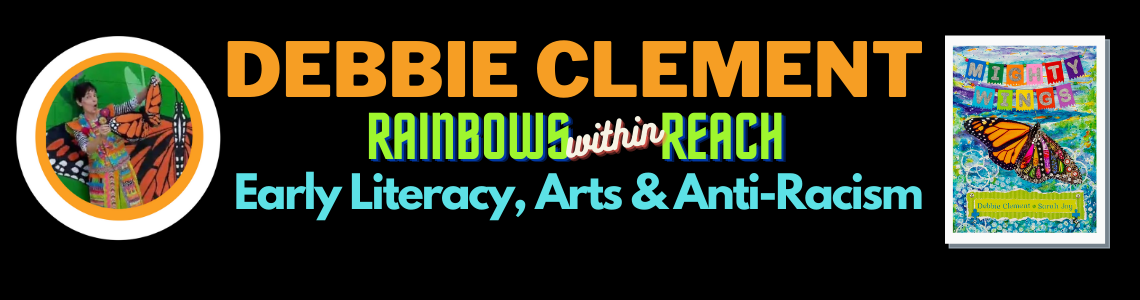
P.S. The pictures of me-in-action in this post were from a library performance in Richland County, Ohio earlier this summer. Who knows how many times I've made the circuit for them? That's a library system that knows how to throw a summer reading program. I had 12 performances in 4 days time!!! 

****Remember, through the entire month of September, all orders of my newly award winning INDIE Award of Excellence picture book, "Red, White and Blue" can receive a 20% savings off the cover price by using the promo code: RWB911 at my website.
Posted by Picasa

Wednesday, September 7, 2011

Movement & Dance Part 3


It's time to return to my on-going 'interview' with Connie Dow, author of Redleaf's new, "One, Two, What Can I Do?" and national expert on dance + movement -- specifically as those topics relate to our working with children. We're really thrilled about our upcoming collaborative presentation at NAEYC in Orlando!!!

I started this interview several weeks ago and you can read here for the initial installments. We then opened the blog comment-box and invited questions to be asked for Connie's reflection and expertise. The very first question came from a fellow national presenter, Vanessa Levin -- author over at Pre-K Pages, who asked on behalf of her own workshop participants:

"I work with a lot of teachers and I notice that some of them shy away from using movement and music in their classrooms because they feel "silly". If they have an assistant teacher or parent volunteers in the classroom they are embarrassed to do these types of things in front of them. What advice can you offer to teachers who struggle with this?"

(Editor's note. Vanessa just so happens to be featuring my book "Red, White and Blue" on her blog TODAY, but that's just a huge, delightful and amazing coincidence! LOL!!)


Before we hear from Connie-the-expert, here's my Debbie two cents........  As you can see, I LUV having the opportunity to work with children and delight at the opportunity to incorporate their creative movement response to my music. In fact, one of my all time favorite things is directing their movement in an open-ended and creative manner. My personal response to Vanessa's question is this: 
"ALWAYS LOOK AT THE CHILDREN!!!"
If you are the least bit self-conscious about moving/dancing in front of other adults, then don't look at them! Seriously, if the adults give you the heebie-geebies? Then don't look at them!!
Tune them out completely. Watch.The.Children.Only!! Make specific and genuine eye contact with your wee wonders and tune out any and all tall people hovering about along the edges. Just immerse yourself in the antics of the children and lose yourself in the midst of their fun! Voila! You're good to go!  

 
Now let's hear from the expert. Here's Connie's response.
Hello FFF (Fellow Friends and Fans) of Debbie,
"I am glad to have some specific comments and ideas to address for this blog post! Today I will respond to Vanessa."
"Vanessa, I understand your question about teachers that feel self-conscious when leading age-appropriate movement and music activities. What I would say is, when assistants or parents are observing, the most important thing they want to see is the children listening to the teacher and being engaged in learning. The best way to do that when leading a dance activity, of course, is for the teacher herself to be immersed in the activity, because the children will be much more likely to follow her lead.

Realizing that we all have that “other self” who can act like a child should make onlookers happy that the teacher can lose herself into the act of teaching regardless if others are there or not. The bottom line? We want the children in our care to be excited and engaged, and they will respond best to a teacher on their level both literally and figuratively! Enjoy the children's delight in movement. Use it to your advantage."

Connie, do you have further insight to share with us?
I would like the opportunity to list some reasons why I think that it is so important to stick with it and bring creative movement to your classroom. I want educators to be aware of the specific benefits of movement for the young child. Understanding the significance may help encourage teachers to get beyond their personal reservations. So I have listed and briefly explained what I consider seven of the principal benefits of movement & dance below:

1st Benefit: Body Awareness and Classroom Management

As children develop body awareness, teachers can use these skills for better classroom management. One of the gifts of structured movement for both student and the adults who work with them is that it helps children develop body awareness and control, which can be incorporated into the rest of the child’s daily routine. Moving is what children are already doing the minute they walk into a learning environment. Why not pick up on that and transition them right into learning? For example, make a game out of fidgeting! Here are three different ideas:


1.) Address numbers and counting: “Let’s count to 10 while we fidget, then freeze!
2.) Or to teach the concept of opposites kinesthetically: “Can we fidget fast, slow, high, low, big, little, forward, backward, right-side-up, upside-down?”
3.) Or a vocabulary lesson: “Can you think of another word for fidget? How about shake? Wiggle? Jiggle? Squiggle?” Show me how your body looks when it squiggles!

As you become more comfortable with guiding movement activities, these are some of the skills children will develop:


  • Body Awareness (range of motion, balance, shape)
  • Control of Speed (Tempo, stop/start, responding to cues for stopping)
  • Control of Direction (Level, direction, floor pattern, size, spatial orientation)
  • Control of Energy (Use of energy and flow to create a specific movement quality)
  • Listening to and follow movement instructions
  • Awareness of personal space and shared space
The above skills will benefit both students and teachers in your early childhood environment.

Connie, Mimi and moi!!
Back now to Debbie..... I promise to give you the rest of Connie's 7 benefits of movement/dance in the early childhood classroom. Honestly!! Come back daily till we get to the end of her list!!! Now go put on your silly pants, start shaking it, keep your eyes on the children, know what you're doing is important and have a good time!!!!

A reminder:  from now thru the end of September all orders of my newly winning national INDIE Award of Excellence picture book, "Red, White and Blue" can receive 20% off the cover price by using the promo code: RWB911 at my website http://www.rainbowswithinreach.com/  See the section on Carie's Kindergarten for their amazing response in quilt work to my book's quilted illustrations.

Posted by Picasa

Saturday, July 9, 2011

Connie's Guest Post: Part II


Thanks again, Connie for the great introduction yesterday. Now all of the educators in the reading audience are holding their breath as you share specifics. What insights & ideas do you have to share?

Tips for Teachers:
"Bringing creative movement into the classroom can actually help with classroom management! Through guided movement activities, children learn body control, balance, awareness of stopping and starting and how fast/slowly they are moving. They become more aware of their own personal space and also the shared space within which all the other children are moving. They are responding to verbal and visual cues, following instructions, contributing ideas in individual and group problem-solving tasks, taking turns, and developing a new form of self-expression.

Introduce movement little by little into your curriculum. You might want to start with a dance story: bring a favorite poem, story, book, or song to life through movement and music, with the children imagining they are moving like the different characters in the book. They might want to dance inanimate objects as well: the sun, the wind, an airplane, etc. It is exciting and surprising at how much movement there is in any book, if you look at it through that lens. One, Two, What Can I Do? is filled with dance story ideas."

Terrific. Do you have any suggestions for the "on-looker-child" the one who seems to observe from the side-lines?

"You can start with a very short activity, and add on to it each day. The book contains many short activities that require no materials, as well as longer themed ones that are designed around Debbie’s delightful songs, or one of her many lively instrumentals. The short activities are a great way to entice the reluctant child(ren) to join in, and repetition of the activity will also help to break the ice, as the children become familiar with it. Then you can gradually try longer activities, as the children become more comfortable with movement and the boundaries you have set for the children during these sessions."

All righty then! How about the opposite extreme? The child with LOTS of energy, enthusiasm, excitement? Suggestions??


"You may have a few very energetic children, and wonder how to control that energy so that the class doesn’t become unruly. I understand that worry, and offer ideas that have worked for me:

Always have a cue that the children understand means “freeze!.” It can be a drum or tambourine, or a sharp clap of the hands. Combine this with a visual cue (holding up a stop sign, etc.) as well. If the children are having fun with the activity but do not follow your instructions, stop the activity and try it again another time, reminding the children about the cues and any other rules you have set (spatial boundaries, etc.) before you begin.

I often ask the high-energy children to be the leaders (Let’s all watch Jimmy jump as high as he can), which both engages them and interests the other children. In addition, the energetic children are often the ones that jump right in to try to solve a movement problem (How would you make your body into a twisty pretzel shape? or What would it be like to slide down a rainbow?) which then inspires the other children to try the activity."

Great ideas, Connie. Any concluding thoughts??

"I would love to make these blog entries interactive. Readers, if you have any questions, ideas, or feedback for me, please send them along in the comment section and I will address them in my next installment.

My most important advice is: Keep on dancin’!"

Connie July 8, 2011


Well there ya go!!! Please post your Connie questions in the comment box. As always all feedback is a complete thrill and totally encouraged.


Friday, July 8, 2011

Guest Post: Connie Dow!!


Ladies & gentleman. My first blog interview!!!!
Drum-roll please.........................

Connie, please take a moment and introduce yourself and tell us a little bit about your background.

"Hello Fellow Friends and Fans of Debbie,

My name is Connie Bergstein Dow. I am thrilled to contribute my ideas here in Debbie’s blog! I am a dance educator and author. I was the little girl who was scared of gym class and was always chosen last for any playground sports team. I also fell down a lot, and was clumsy and felt as if I couldn’t get the parts of my body to work together. My parents decided to try me in some dance classes, and lo and behold, I found out I wasn’t so much uncoordinated as just very flexible and needed to gain strength and body awareness. Dance was the gift that I needed to help me develop confidence and grace. I loved it so much that I never wanted to stop, and have been very fortunate to have a career in the field of dance.

I studied dance at Denison University, and then received my MFA from the University of Michigan. I was a professional dancer for 10 years, and have been a dance/movement teacher for over 40. For the last 7 years I have been writing about the art of dance, and particularly about bringing movement opportunities to young children. I have written two books and several articles about movement."

Thanks so much, Connie. How about starting off by telling our reading audience how the two of us were introduced to each other?

"I met Debbie through our mutual friend Mimi Brodsky Chenfeld during a moment of serendipity at the 2007 NAEYC convention in Chicago. I was telling Mim about the release of my first book (Dance, Turn, Hop, Learn! Enriching Movement Activities for Preschoolers), and explaining to her that I wanted to team up with a musician for my next book. She said, “Well, then you must get together with Debbie Clement!” Just at that very moment, Debbie appeared out of the crowd of thousands of attendees, and the seed was planted for our future collaborations. I have had the privilege of working with Debbie at OAEYC conferences, at the Ohioana Book Festival, and for the past two years, on our new book, One, Two, What Can I Do? Dance and Music for the Whole Day. Dance and music are natural companions, so bringing together Debbie’s music and my movement activities was a natural as well."

Great! Now I'm so eager for you to share what your goals were with the creation of your new book, our collaborative project.

"I had many goals in mind when I began writing this book. First and foremost, I wanted the format to be extremely teacher-friendly. Having Debbie’s music as a resource for the teachers would be a huge plus. The teacher can choose the activity based on the musical selection, or based on any number of other ways that the book is organized: the daily routine, available space, subject matter, etc.

The chapters in the book are based on the child’s day; the opening chapter offers greeting activities, followed by a chapter on movement for circle time. Successive chapters address lessons about language arts, math, science, and social studies, transitions, large motor skills, and quiet-down activities. The last section offers lots of ideas for creating dance and music presentations with young children.

Another goal was to help educators teach, reinforce, and have fun with age-appropriate movement skills. Throughout the whole book, there are tips for refining these skills in young children.

A theme running throughout the book, and another extremely important concept that I wanted to address, is encouraging and nurturing creativity in children. A child may try to respond to a movement prompt about making a letter shape in his body, for example. He may not even remotely resemble the letter in his attempt, but he is still learning. He is recognizing the letter, listening to and following movement instructions, and attempting to make the letter shape in his body, and thereby learning new concepts kinesthetically. The creative aspect of this exercise, making letter shapes in the body (it may be standing, jumping, on the floor, sitting, kneeling) is the child’s approaching a task through movement and body awareness. Many children who do not excel in other arenas might find their creative spark through movement."

***** Here ends today's installment: Part I with Connie Dow. I will work diligently to get the rest of our initial interview posted tomorrow, before I leave for SDE's ITK event in Vegas. In the second portion of Connie's interview she addresses "Teacher Tips" and I know that will be of significant interest. It is our intent to have Connie be a 'regular' feature here at RainbowsWithinReach, taking residence as our official authority on Dance/Movement. She is happy to address questions and concerns from readers in upcoming appearances. Please feel free to leave your questions in the comment section here on the blog.

[Aren't you glad I'm taking that 31 Day Build a Better Blog Challenge? You can teach an old dog new tricks, after-all.]

Tuesday, May 10, 2011

Wonderful Webinar: Wow


We interrupt this European travelogue with late-breaking, time sensative info and amazing developments. D-R-U-M-R-O-L-L please........................... After years & years of effort, the newest project with my name in the small print, has rolled off the printing presses. Connie B. Dow's encyclopedia-like resource book for teachers of young children on the infusing of dance and movement into the classroom is ready for prime time. "One, Two, What Can I Do? Dance and Music for the Whole Day" has arrived!!


Connie's book is filled with hundreds of ideas, over 300 pages worth in fact! There are oodles of organized index' to direct you to easily inserting the routines within your own rituals and curriculum themes. Wait till you see it!! Included inside the back cover are a two disc set of all sorts of my music. There are a dozen 'sung' songs and over 30 instrumentals that will lend themselves to all sorts of creative movement ideas.


By virtue of having my music included in Connie's project I am now in the Redleaf club of authors. By virtue of being in that club, I am about to give my first WEBINAR -- thru the Redleaf Academy. Yes, folks. Next Monday, May 16th at 7:00 EST I will be giving my first, hour long, webinar!!! There's still room to join in officially. More importantly you can think good thoughts as I learn how to use the technology (ye gads, cave person learning more about technology alert!!) The title of this exciting sixty minutes is, "If You Can't Sing Good, Sing Loud" and we will focus on my 'easiest' songs. Start the 'wishing-me-well' thoughts. I'll need each one!

Connie and I have already been busy sharing this project. We had a collaborative workshop presentation at OAEYC & book signing to end the month of April. Last weekend we joined forces and participated together at the annual Ohioana Book Festival. The initial response has been so exciting! Wait till you see how big it is!!!


P.S. You can buy the 2 CD set independantly if you've already written an encylopedia of over 300 pages of your own dance & movement ideas. Actually it's available so that you can keep a copy or two of the book in your center's resource library and have the music in individual classrooms. Anyway you slice it -- Redleaf Press has thought of your needs.

Thanks for your support! I am so appreciative of your pins!

Thanks for your support! I am so appreciative of your pins!
Related Posts Plugin for WordPress, Blogger...